Why Are God of Fire Cigars So Expensive?
God of Fire cigars cost more than most premium cigars because of how few of them exist. Between limited production runs, years of aging before release, rare tobacco, and the luxury Prometheus packaging built around every box, the price reflects real scarcity, not just a brand name. Here's what actually drives the cost.
Extremely Limited Production Runs
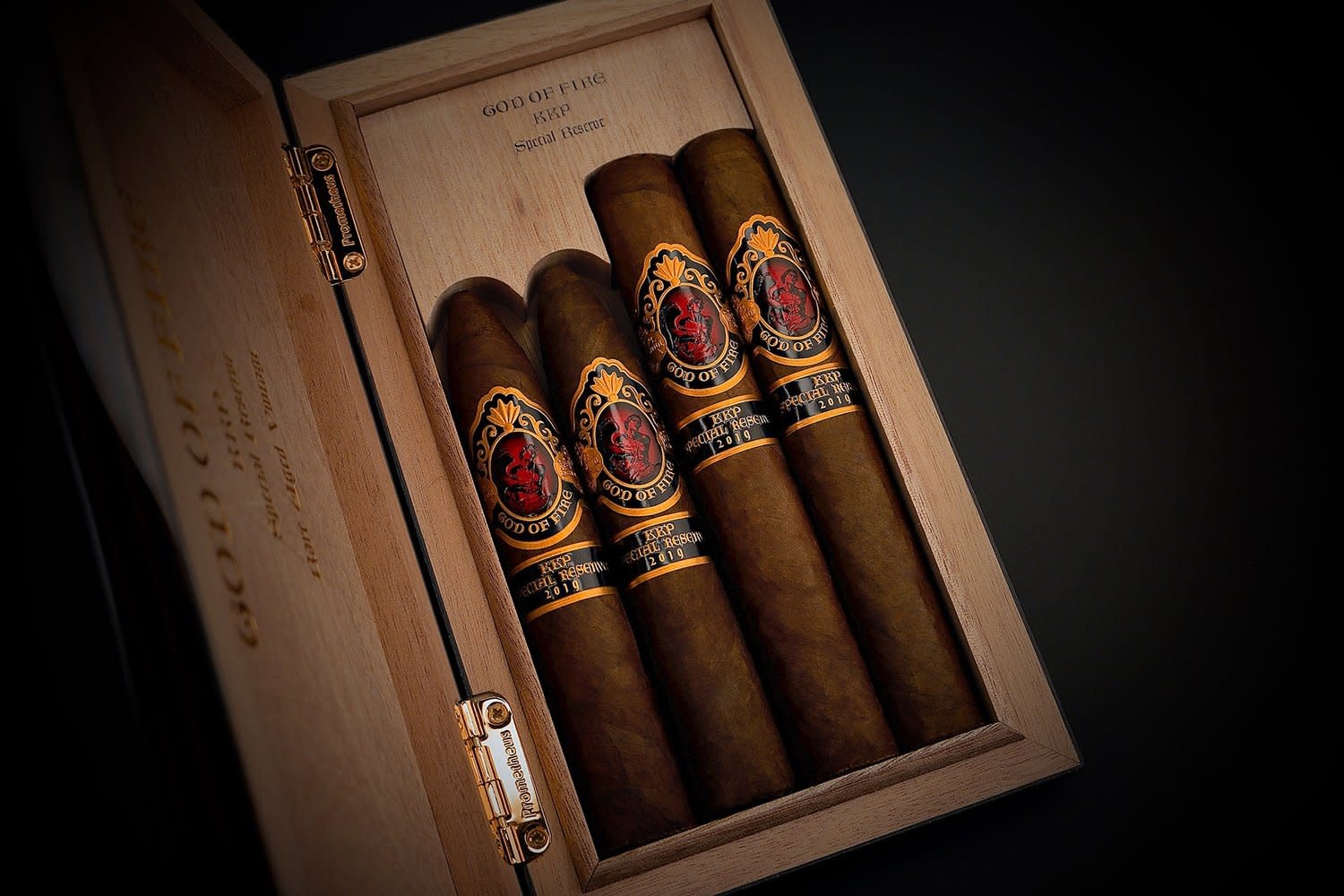
Most God of Fire releases are made in small batches on purpose. The KKP Special Reserve line, for example, has run as small as 300 boxes total for an entire release. When a blend sells out, it does not get reprinted on demand the way a mass-market cigar would. That scarcity alone pushes prices up, since supply rarely catches up with demand before the next release replaces it.
Extended Aging Before Release
Some God of Fire blends, including the Don Carlos and Carlito lines, are aged two to three years post-rolling before they're released for sale. That's tobacco sitting in inventory, tying up capital and warehouse space, for years before it generates a single dollar of revenue. Longer aging also means the leaf has to be selected and stored with more care from the start, since a poorly cured leaf won't hold up over an extended rest.
Rare, Hand-Selected Tobacco and Wrappers
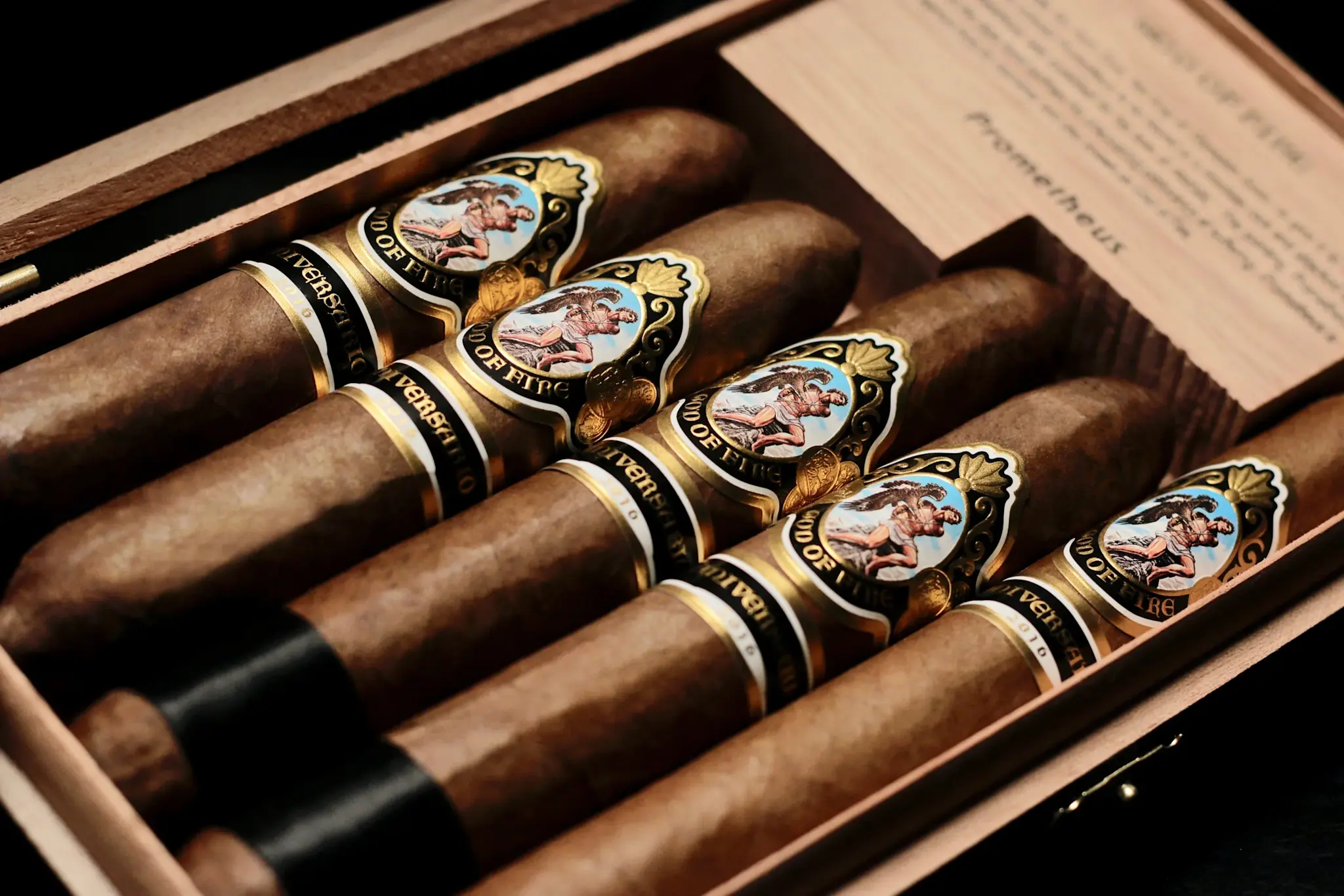
Each God of Fire blend uses a specific wrapper, Ecuadorian, Cameroon, Connecticut Broadleaf, or Dominican Habano, chosen for that blend's flavor profile rather than for cost. Premium wrapper leaf is graded and hand-selected, and the top grades used in a line like this make up a small fraction of any given harvest. Combined with aged Dominican binder and filler grown on Fuente family farms, the raw tobacco cost per cigar is meaningfully higher than a standard premium smoke.
The Prometheus Partnership and Luxury Packaging
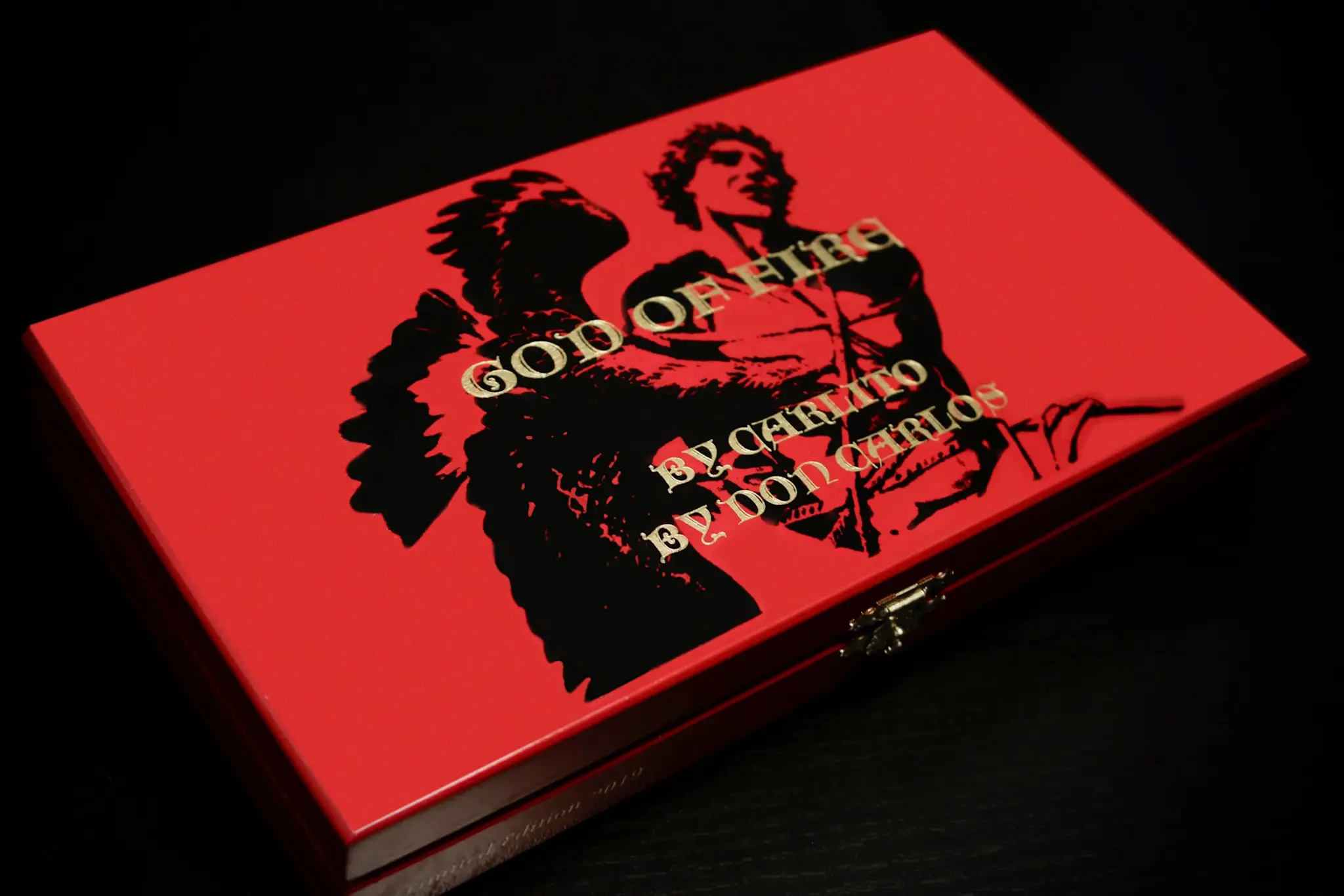
God of Fire is a collaboration between the Fuente family and Prometheus International, a company known for high-end cigar accessories. That partnership shows up in the presentation: the signature red and black boxes, the two-band system marking blend and vintage, and in some releases, limited edition travel humidors included with the box. None of that is cheap to produce in small quantities, and it's part of what you're paying for alongside the tobacco itself.
High Demand From Collectors Keeps Prices Up
Because releases are limited and don't get reprinted, God of Fire has built a following among collectors as much as everyday smokers. When a release sells out at retail, secondary market prices climb well above the original box price. That collector demand doesn't lower prices at the source. If anything, it gives retailers less reason to discount a line that reliably sells through. For a deeper look at how limited production shapes pricing across the category, our collector's guide to limited edition cigars covers the same dynamic with the Esteban Carreras line.
Is God of Fire Worth the Price
Whether God of Fire is worth it comes down to what you value in a cigar. If you want consistent construction, aged tobacco, and a line with real scarcity behind it, the price reflects those things honestly. If you're mainly looking for an everyday smoke, a lower-priced premium cigar will serve you just as well day to day. God of Fire makes more sense as an occasional or special-occasion box than a daily habit for most smokers. Once you've picked a blend, our guide to which God of Fire blend to try first can help you match one to your palate before you spend the money.
Frequently Asked Questions
Is God of Fire a good cigar?
Yes. It's widely regarded as one of the more consistent limited-production lines from the Fuente family, known for careful construction and aged tobacco.
What is the most expensive God of Fire release?
Limited anniversary releases like the KKP Special Reserve and KKP Never Back Down tend to carry the highest prices, since they're produced in the smallest quantities. Our KKP Special Reserve vs. Never Back Down comparison breaks down how the two differ.
Do God of Fire cigars need special storage?
Like any premium cigar, they should be kept in a humidor set to roughly 65 to 70 percent relative humidity. Given the cost per box, a reliable humidor is worth the investment to protect what you've bought.
Does the price ever come down?
Rarely. Once a release sells out, it typically doesn't return at the original price, and secondary market prices tend to run higher, not lower.
Shop God of Fire
Browse current availability in our God of Fire collection. Stock moves quickly on limited releases, so if you see a blend you want, it's worth grabbing it before it sells out. Not sure which one to start with? Stop by our Roswell shop and we'll walk you through what's in stock.
Recent articles
View all
Briar vs. Meerschaum vs. Corn Cob: Choosing Your First Tobacco Pipe
Understanding Pipe Tobacco Cuts: Ribbon, Flake, Plug & Cube